The pre-alpha is playable
Scene Seven runs right on this page now, with the AI plugged in through the site. It's rough, things will break, and saves may not survive updates. That's what pre-alpha means.
A game in development · Stage 3
Run a film studio. You cannot watch the film you make. You can read it. Critics quote your scenes back at you.
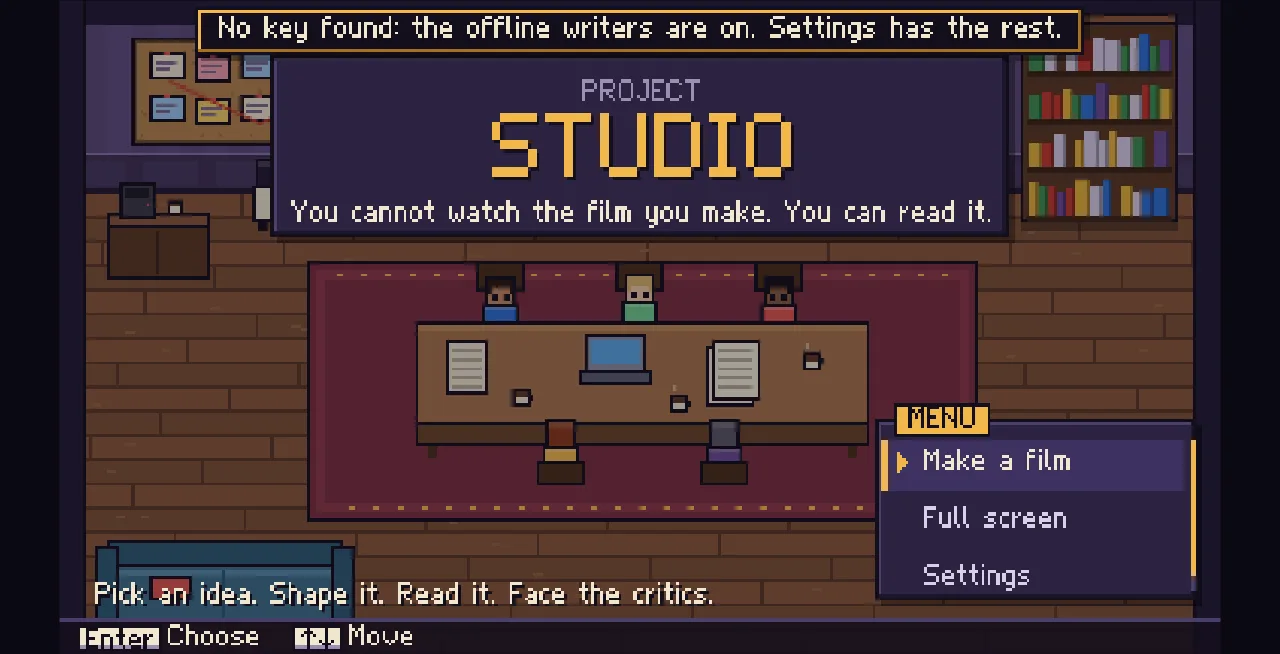
The pre-alpha is playable now: rough, unfinished, and it changes often. Saves may not survive updates. The Windows download comes later.*
* told you I love sharing things early. tell me what breaks.
Tell me when it's outScreenshots
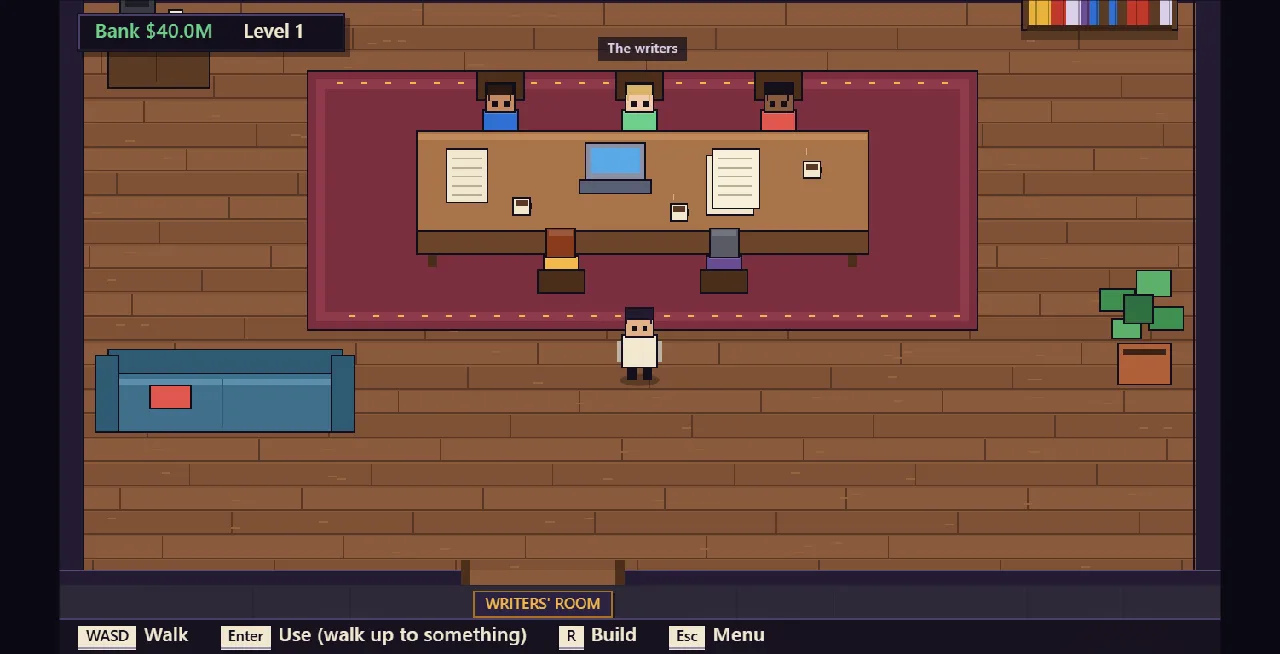
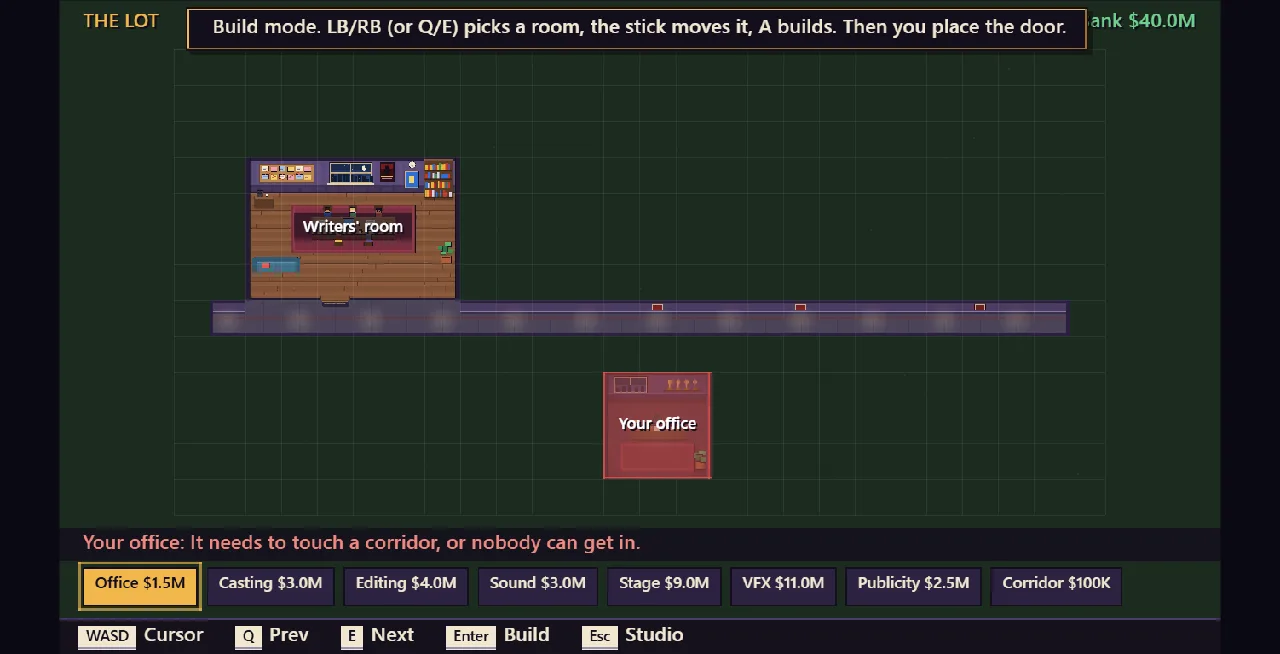
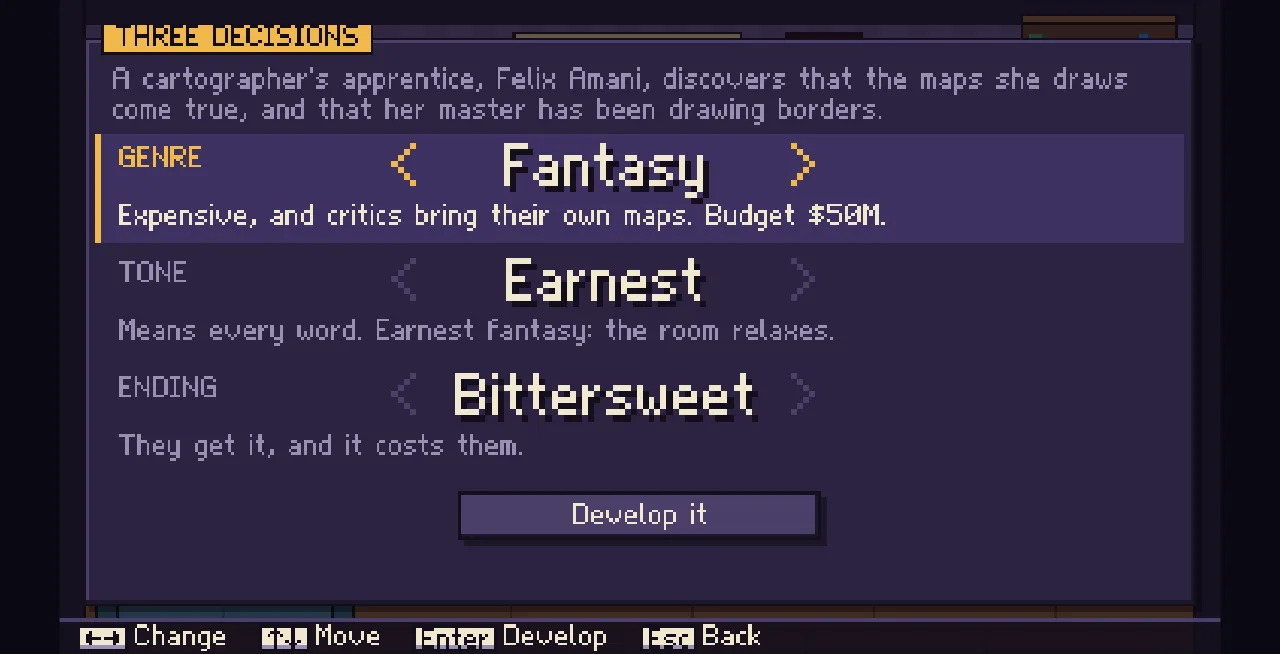
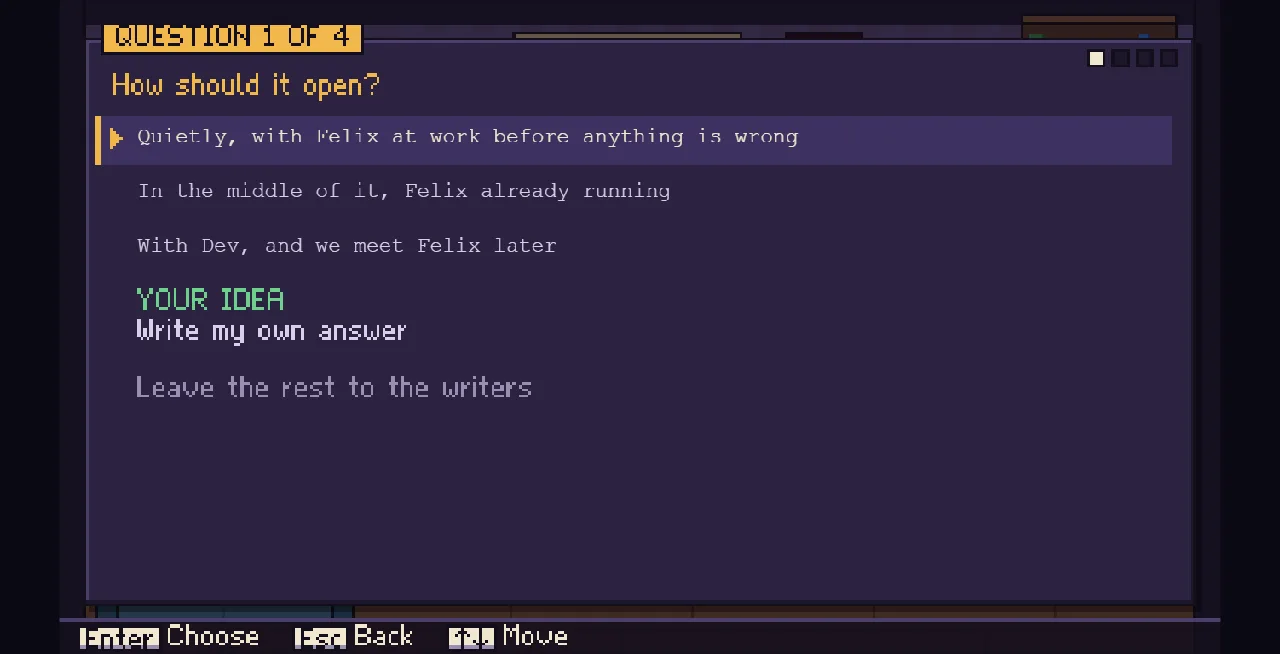
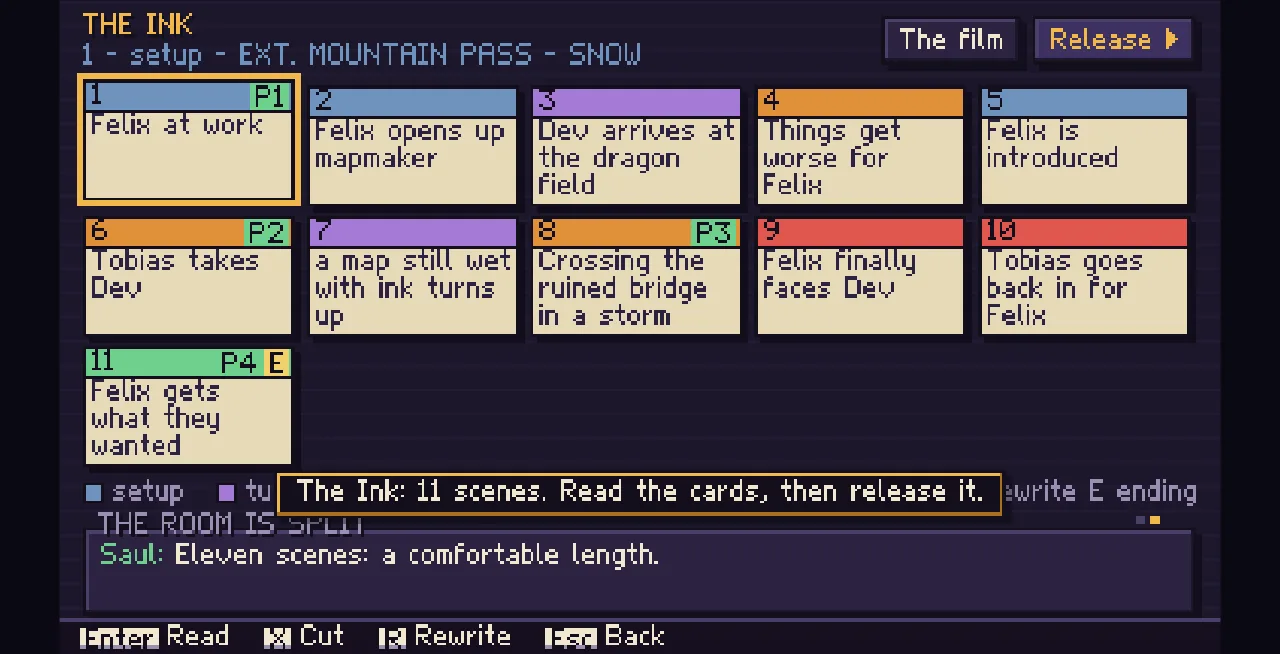
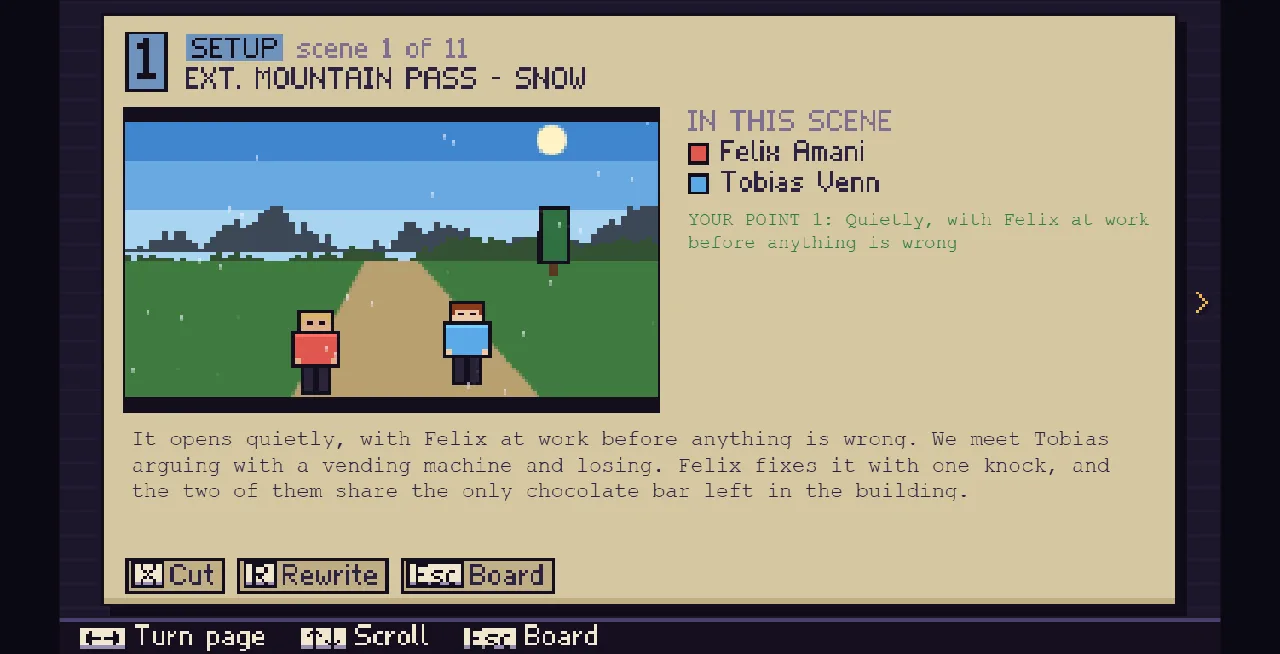
No trailer magic: every picture here is the actual Stage 1 build, running in a browser.
Roadmap
"Playable" means it runs today. "Designed" means it's written down in detail but not built. I only build the next stage once the current one feels right.
Devlog
Straight from the commit history, in plain words.
Scene Seven runs right on this page now, with the AI plugged in through the site. It's rough, things will break, and saves may not survive updates. That's what pre-alpha means.
Project Studio is now Scene Seven. Same game, a name that sounds like a film.
Every department you own asks you something about the film, in its own room: the look, the cut, the score, the effects, the campaign and the opening weekend. Its head reacts straight away, and the critics hear the same note.
Five rival studios with names that wink at the real ones release films on their own schedules. Every weekend is a box-office chart with your rank in the news, and the year ends with the Silver Clappers, four prizes opened one envelope at a time. There is always a next goal.
Films are shot and finished over weeks, things go wrong on set, the money arrives by the weekend, and your studio gets a name.
Seven choices make a poster: layout, palette, figures, backdrop, lettering, an effect and the tagline. The room says what it thinks of each one, and a good poster opens bigger. Every release now earns experience: levels, and twelve skills that each change something you can see on the next film.
Sixty fictional actors, each with a CV, a fee and a quirk. Who takes your call depends on your reputation. The critics don't only ask "was this the ideal actor?": getting the best one a small studio could actually sign earns praise.
Walk out of a door into the corridor and into the next room. Doors got wider and easier to walk through, and every room is easier to read at a glance.
You walk your studio and use what you walk up to. There's money, a lot to build rooms on, and saves. The game is drawn at your screen's real resolution now, and the plan for moving it to Unity is written down: what ports as-is, what gets rewritten.
The advisors were quietly agreeing because they could see each other's answers. Now each side judges the script alone, so the disagreement is real.
Scenes fill the screen now, the text is readable from the couch, and each scene is drawn.
Knowing the box office the moment you release killed the tension. I wrote down why release needs time, and what that costs the scoring, before touching the code.
The film became a board of scene cards that say what happens, not where. You can see the shape of the story at a glance.
The first version had one editor telling you the right answer, which turned a creative choice into a maths problem. Now several people argue, and you decide.
The review, the rule it broke (never tell the player what's correct), and the plan to run without internet on a small local model.
The whole studio game written down first: the promise, the screens, watched production, and how to spot a copied script.
More
[ THE DIRECTOR ]